
 Justin Majek
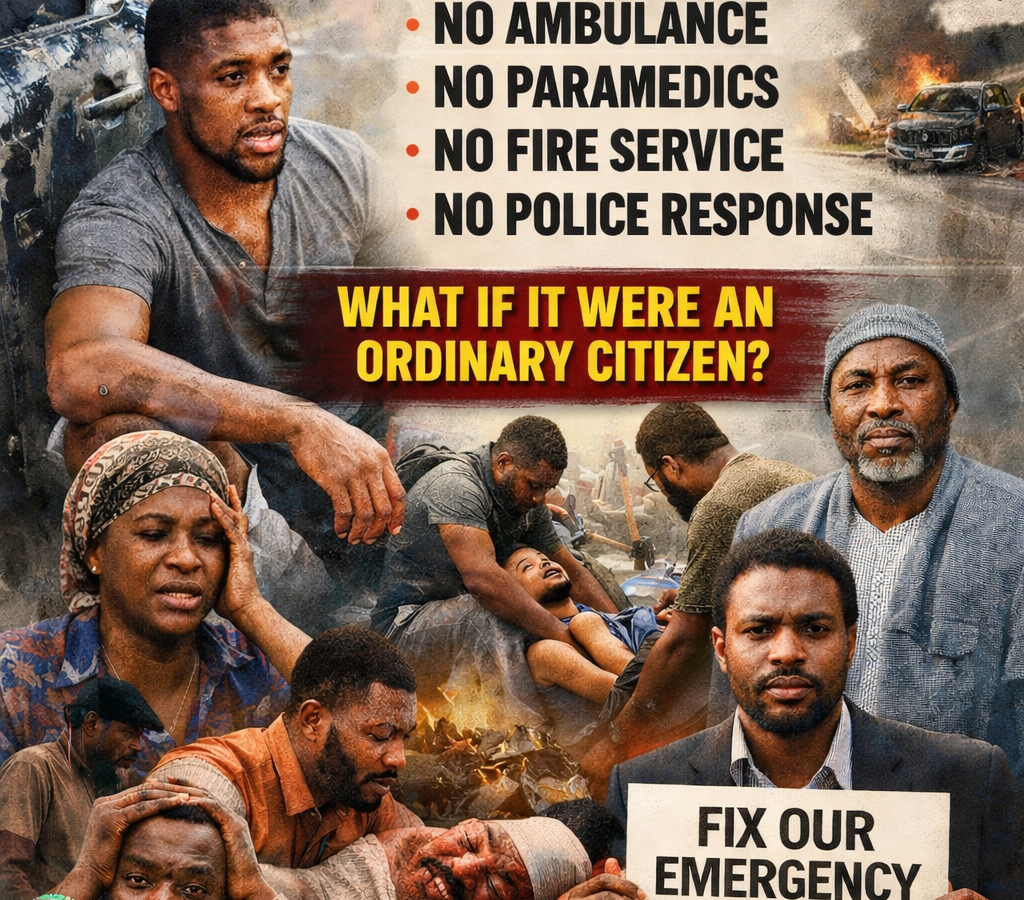
We, concerned citizens of Nigeria and friends of Nigeria worldwide, write to express our deep concern over the recent road accident involving Anthony Joshua, the internationally celebrated heavyweight boxing champion, while he was in Nigeria.
Despite its global status and the public nature of the incident, no functional emergency response services reportedly arrived promptly at the scene. There were no paramedics, no ambulance, no fire service presence, and no visible police led accident response.
This incident must not be dismissed as an isolated occurrence. Rather, it stands as a symbol of a wider, systemic failure within Nigeria’s emergency response framework, a failure that affects millions of ordinary Nigerians daily, often with fatal consequences.
Detailed Account of the Absence of Emergency Services
1. No Paramedics or Immediate First Aid
The absence of trained paramedics at the scene exposed those involved to severe and potentially life-threatening risks. In emergency medicine, minutes matter. The lack of immediate medical intervention could easily result in preventable loss of life.
2. No Ambulance Service
There was no evidence of a coordinated ambulance response capable of safely transporting injured persons to a medical facility. This reflects a glaring weakness in publicly funded and accessible emergency medical transport systems.
3. No Fire Brigade Presence
Road accidents often carry risks of vehicle fires, fuel leakage, or the need for technical rescue and extraction. The absence of the Federal Fire Service represents a dangerous gap in emergency preparedness.
4. Police Absence and Lack of Accident Protocol
There was no visible prompt deployment of the Nigeria Police to secure the scene, manage traffic, or enforce standard accident response procedures, putting victims and bystanders at further risk.
The Broader Implication: A Failing National System
If such a breakdown can occur during an incident involving a world-renowned athlete, what hope does the ordinary Nigerian have?
Every day, Nigerians face road accidents, medical emergencies, fires, and disasters with little or no reliable emergency support. This incident underscores the fragile state of Nigeria’s healthcare delivery, disaster preparedness, and inter-agency coordination.
The absence of emergency services is not merely inconvenient; it is a national embarrassment and a direct threat to public safety.
Our Specific Requests to Federal Government Agencies
We respectfully but firmly call on the Federal Government to take the following actions:
Federal Ministry of Health
-
Mandate and deploy trained paramedic units nationwide
-
Establish and fund a reliable, publicly accessible ambulance network
Federal Road Safety Commission (FRSC)
-
Strengthen accident response protocols
-
Improve coordination with medical, police, and fire services
Nigeria Police Force
-
Ensure rapid deployment to accident scenes
-
Enforce traffic control, public safety, and emergency protocols
National Emergency Management Agency (NEMA)
-
Improve inter-agency collaboration
-
Increase public awareness of emergency response numbers and procedures
Federal Fire Service
-
Upgrade emergency equipment
-
Guaranteed timely dispatch to road accidents and fire-related emergencies
Call for Transparency and Accountability
We demand:
-
A public investigation into why emergency systems failed during this incident
-
A clear implementation timeline for national emergency response reforms
-
Independent oversight involving civil society organisations to monitor progress and accountability
Mobilising Public Support
This petition represents the collective voice of Nigerians who believe that human life must be valued above excuses and bureaucracy.
We demand action, not excuses. Swift and decisive reforms are essential to restore public confidence in Nigeria’s emergency services.
Conclusion – A Matter of National Pride and Safety
A functional emergency response system is a basic right, not a privilege. It is a cornerstone of any developed and responsible society.
Nigeria must act now before more lives are lost to preventable failures. The safety of citizens and visitors alike depends on it.
What if it were an ordinary citizen?
Status: Concerned Citizen



Write a Reply or Comment
You should or Sign Up account to post comment.